
Siding Repair in Bellingham, WA
Localized siding repair is a practical option for homeowners dealing with specific, contained damage cracks, loose panels, localized rot, failed caulking, or impact damage without needing a full exterior replacement. Describe your siding concerns and submit a repair estimate request to find out what may be possible for your project.
Common Siding Damage That May Be Repairable
Not every siding problem requires a full replacement. Many homeowners find that specific, contained issues can be addressed with targeted repairs, restoring function and appearance without the cost of a complete exterior project.
Cracks and Splits
Temperature changes, age, or impact can cause siding panels to crack or split along their length or face. Small cracks in fiber cement or vinyl may be repairable depending on their extent and location within the panel.
Impact Damage
Hail, fallen branches, or accidental strikes can dent, crack, or puncture panels. Individual damaged sections are often replaceable without touching the surrounding exterior, making targeted repairs efficient.
Loose or Missing Panels
Panels that have worked free from their fastening or gone missing expose the wall assembly beneath. Prompt attention helps prevent moisture from reaching the sheathing and causing more significant damage.
Warped or Buckled Materials
Vinyl siding installed without adequate expansion room may buckle in warm weather. Warped wood or fiber cement may indicate moisture behind the panel or a fastening issue that can often be corrected with a targeted repair.
Localized Wood or Cedar Rot
Soft, discolored, or crumbling wood in a limited area can sometimes be cut out and replaced with matched material, provided the rot has not spread to the wall framing or sheathing behind the affected section.
Failed Trim and Caulking
Cracked, missing, or deteriorated caulk at joints, corners, and penetrations is one of the more common entry points for moisture. Re-caulking and trim repairs are often straightforward localized fixes.
Why Damage Near Windows, Doors, and Penetrations Matters
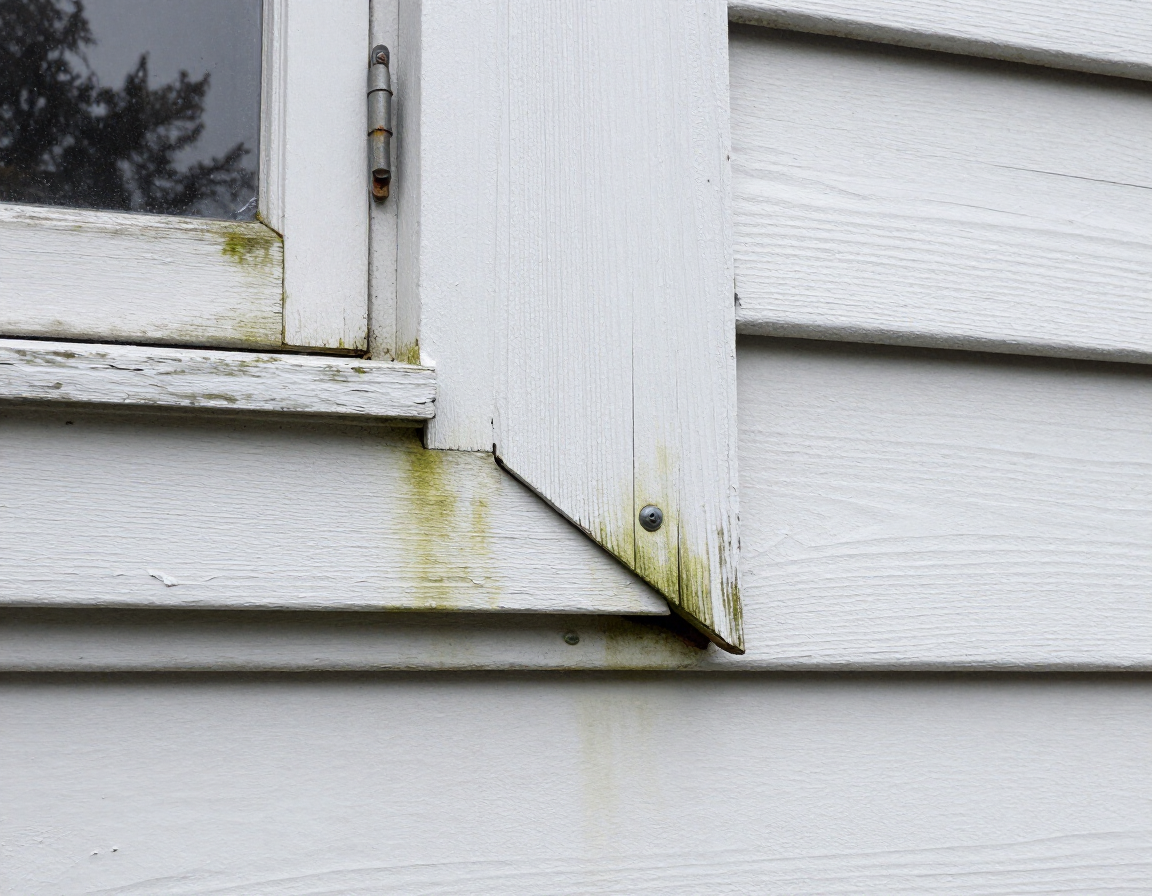
The areas where siding meets window frames, door frames, utility penetrations (hose bibs, dryer vents, electrical boxes), and rooflines are among the most common locations for water intrusion. The joint between siding and trim relies on caulking, flashing, and correct installation details to stay watertight, and those details can fail before the siding itself shows obvious problems.
When caulk fails, flashing lifts, or trim pulls away from the wall, water can enter the gap during rain events. Over time, this moisture can affect the wall sheathing, insulation, or framing, causing damage that is more costly and disruptive to address than the original siding repair would have been. Prompt attention to visible failures near openings is generally worthwhile.
A repair evaluation around openings should look beyond the visible siding surface. Signs of soft material, staining, swelling, or paint failure near a window or door corner may indicate that the damage extends into the wall assembly. Depending on findings, a targeted repair may be appropriate or a broader assessment may be recommended before proceeding.
Matching Existing Siding: What to Expect
One of the most common questions about localized siding repair is whether new material can be matched to the existing exterior. The honest answer depends on several factors, and a good match is not always guaranteed, though it is often achievable with the right preparation.
Material Profile and Generation
Siding profiles change over time, and a product that was common ten or fifteen years ago may have been updated or discontinued. Fiber cement and engineered wood lines evolve their profiles and textures. Vinyl product lines are reformulated periodically. Matching the specific profile requires identifying the existing material, manufacturer if possible, and the approximate installation period.
Color and Weathering
Even when the same product and color are available, years of UV exposure cause siding to fade. A new panel installed alongside weathered siding will often stand out initially. This difference typically softens over time but may be noticeable for a period. Painting the repaired section or the full elevation is one option that provides a more consistent result.
Wood and Cedar Matching
For cedar and natural wood siding, matching involves both the physical profile (width, thickness, texture) and the finish. A skilled repair using the correct species, profile, and matching stain or paint can blend well but finding matching cedar in specific profiles is not always straightforward, and finish color matching takes care.
When a match is not achievable or the visible difference would be significant, some homeowners choose to use the repair as an opportunity to reconsider the full exterior. This is worth discussing when requesting an estimate. Learn more about siding replacement options.
What Visible Damage Can Indicate Beneath the Surface
Siding damage visible from the exterior a soft spot, a stained panel, bubbling paint is sometimes the surface expression of a deeper problem. The siding itself is one layer of a wall assembly that includes a weather-resistive barrier, sheathing, insulation, and framing. When water has been entering through a failed joint or damaged panel for an extended period, the layers behind the siding may have been affected before any outward signs appeared.
A repair evaluation may involve more than looking at the damaged panel. If the siding in the area feels soft, if there is staining around the edges of a panel, or if fasteners show rust or the panel has pulled away from the wall, a thorough evaluation would consider whether the sheathing behind it has been compromised. Finding this during a repair is better than discovering it later.
This guidance is general it does not diagnose any specific property. Some visible damage is genuinely surface-only, and repairs are straightforward. Others involve deeper issues. The purpose of the repair evaluation process is to understand what is actually present before scope and cost are discussed.
When submitting a repair request, describe what you have observed, when you noticed it, how long it may have been present, and any associated interior symptoms like staining or humidity. That detail helps set realistic expectations for the evaluation.
When Repair May No Longer Be the Most Practical Path
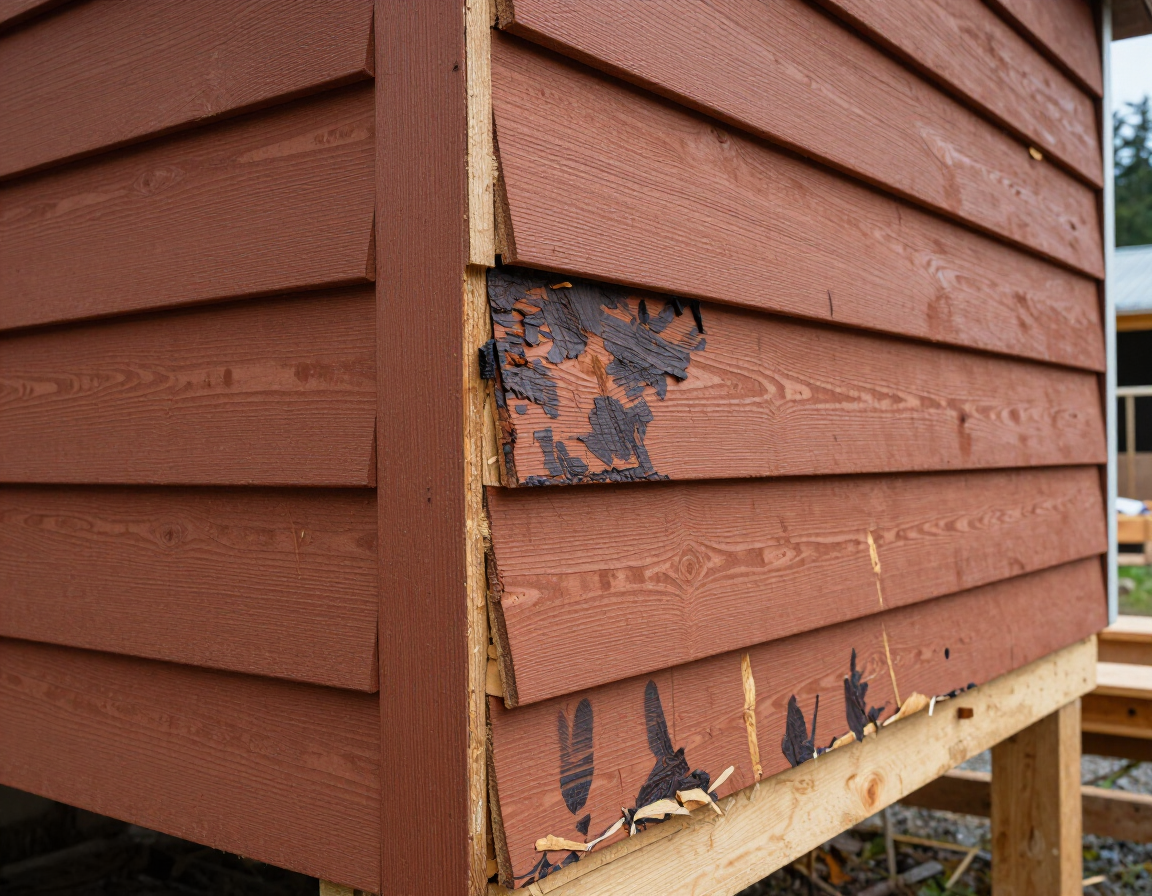
Siding repair is the right approach for many projects but there are situations where repeated repairs, the extent of deterioration, or material availability make replacement the more practical and cost-effective choice. Understanding those situations helps homeowners make a more confident decision.
Repair May Be Appropriate When
- Damage is limited to a small, clearly defined area
- The surrounding siding is in good overall condition
- Replacement material in a matching profile is available
- The wall assembly behind the damage shows no signs of moisture involvement
- The existing siding still has reasonable service life remaining
- The homeowner wants to address a specific issue without a full exterior project
Replacement May Be Worth Considering When
- Deterioration or damage affects a significant portion of the exterior
- Moisture problems appear in multiple areas
- The existing material is no longer available for matching
- Maintenance has become frequent and recurring
- Multiple localized repairs would only delay a larger project
- The homeowner wants to update the full exterior appearance
- Hidden damage discovered during a repair scope has expanded the project
The line between repair and replacement is not always clear before an evaluation. Some projects that appear to be simple repairs reveal conditions that shift the conversation. Explore siding replacement options in Bellingham.
Why Prompt Repair Matters in Bellingham's Wet Climate
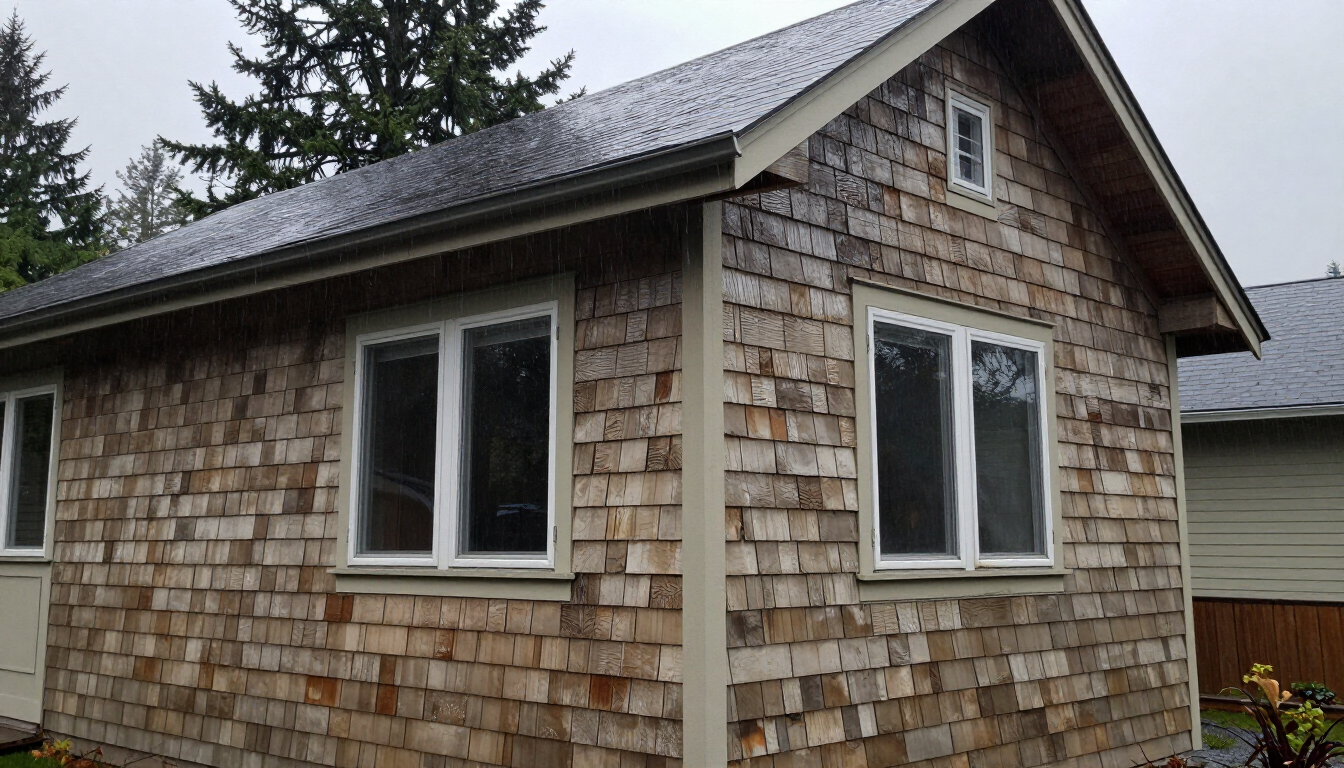
Bellingham receives substantial rainfall across a long wet season, and exterior siding takes the full brunt of that exposure year after year. Unlike drier climates where a small crack or failed caulk joint may go unaddressed for a season without major consequence, in Western Washington's wet climate the same gap can allow moisture to accumulate behind the siding before the next dry period arrives.
Wood and fiber cement are both more vulnerable to prolonged moisture exposure than vinyl. Cedar and wood siding that remains wet for extended periods is more susceptible to rot, swelling, and finish failure. Fiber cement that loses its paint film or has compromised joints can absorb moisture at edges and cut ends. Both materials benefit significantly from timely repair and maintenance.
Siding is not meant to be a watertight barrier on its own a properly installed assembly includes a weather-resistive barrier and an arrangement that allows any incidental moisture to drain and dry. When siding is damaged, that drainage path may be compromised and moisture can accumulate where it is not intended.
Inspect your siding exterior at least once a year, particularly after winter, and address any failed caulking, soft spots, cracked panels, or paint failures before they allow moisture to reach the wall assembly. Earlier attention to small problems generally means a smaller and less expensive repair.
Factors That Affect Siding Repair Costs
Siding repair costs vary considerably from one project to the next. Rather than publish estimated prices that may not reflect the specifics of a given home, it is more useful to understand what drives those differences. The following factors typically influence what a repair project may involve and what it may cost. An accurate estimate requires evaluating the actual conditions.
Extent and Location of Damage
A small number of panels in an accessible ground-floor location represents a very different scope than damage spread across multiple elevations or on upper-story walls requiring staging or a lift.
Material Type
Fiber cement, vinyl, wood, cedar, and engineered wood each have different material costs, cutting and fastening requirements, and finishing needs. Material availability and lead time can also affect project cost.
Matching Difficulty
When a precise match to an existing profile and color is required, sourcing material takes additional time and may limit options. Profiles that have been discontinued may require custom solutions or broader surface treatment to achieve a consistent result.
Access and Preparation
Ground-floor repairs on flat terrain are generally simpler to access. Steep grades, landscaping, decks, or upper-story locations may require additional setup, staging, or specialized equipment that affects the total project cost.
Underlying Wall Conditions
If an evaluation reveals damaged sheathing, compromised weather-resistive barrier, or rot in the framing, addressing those conditions before re-siding adds to the scope. The full picture typically becomes clearer during or after opening the repair area.
Finishing and Caulking
Some materials require painting or staining after installation. Caulking joints, priming, and finish coats add time and material cost particularly for wood and fiber cement that require paint as part of their moisture protection.
No specific price ranges are provided here because they wouldn't be accurate without evaluating the property. Submit your project details, including any photos, for a meaningful starting point toward understanding your repair scope.
Scheduling Considerations for Siding Repair
The most important scheduling factor for siding repair is often urgency. Damage that is actively allowing moisture into the wall assembly a missing panel, an open joint, or visible soft material warrants earlier attention than cosmetic cracking on a surface that otherwise remains intact. Describe the current condition honestly when requesting an estimate so the urgency of the situation can be assessed appropriately.
Provider availability varies by location, season, and project type. During Bellingham's busier exterior-remodeling seasons, typically late spring through early fall, project schedules fill more quickly. Submitting a request earlier rather than waiting until the problem worsens gives more flexibility for scheduling.
Many exterior siding repairs can be performed across Bellingham's cooler and wetter seasons with appropriate planning, though extreme wet weather or freezing temperatures may affect certain materials or finishing work. The provider connected to a specific project can discuss timing and any weather-related constraints that apply to the work involved.
How to Submit a Repair Estimate Request
Submitting a repair request is straightforward. The process is designed to gather enough information about the property and the visible damage to allow an appropriate follow-up while being transparent that submitting a request does not guarantee an estimate, a scheduled appointment, or project acceptance.
1
Tell Us About Your Repair Project
The homeowner submits information about the property and current siding concerns.
2
Review Your Project Needs
The project type, location, material interests, timeline, and other details are reviewed.
3
Connect With a Siding Professional
The homeowner may be connected with an independent professional who serves the project location.
4
Receive and Evaluate Your Estimate
The homeowner can discuss options, scope, materials, availability, and pricing directly with the provider.
Siding Repair Requests Accepted From Whatcom County Communities
Repair estimate requests may be submitted from Bellingham and the surrounding Whatcom County area. Bellingham is the primary service focus. Provider availability depends on the project location and the independent professionals serving that area; not all requests can be matched with a provider in every community.
Bellingham
Ferndale
Lynden
Blaine
Birch Bay
Sudden Valley
Everson
Nearby Whatcom County Communities
This list is not exhaustive. Homeowners in other Whatcom County communities are welcome to submit a request, and provider availability will be assessed for their location.
Siding Repair Questions from Bellingham Homeowners
Common questions about siding repair range from assessing damage and understanding cost factors to deciding whether repair or replacement is the better path for your project.
How do I know whether my siding damage can be repaired or whether I need replacement?
Localized damage — a few cracked panels, a section of failed caulk, a small area of rot in otherwise sound siding — is often repairable. Widespread deterioration, recurring moisture problems across the exterior, or material that is no longer available for matching may point toward replacement as the more practical choice. An evaluation of the actual conditions is the most reliable way to answer this for a specific home. For a side-by-side comparison, see our page on siding replacement options at /siding-replacement.Can damaged siding be repaired without replacing the whole exterior?
Yes, in many cases. Localized repairs target the specific area of damage without disturbing the surrounding siding. The key factors are whether the damage is truly contained, whether matching material is available, and whether the wall assembly behind the visible damage is in acceptable condition.Will the repaired section match the rest of my siding?
A match depends on the material, how long the existing siding has been installed, and whether the same profile is still available. New panels will often look slightly different from weathered material initially. Painting or staining both the repaired area and the surrounding elevation can help achieve a more consistent result.What should I look for to identify siding damage that needs attention?
Common signs include cracked or split panels, soft or spongy areas when pressed, paint that is peeling from the siding surface (rather than from the trim), visible staining or discoloration near joints or window corners, panels that have pulled away from the wall, and caulk that has cracked, shrunk, or pulled away from the joint.How does Bellingham's wet climate affect wood and fiber cement siding repair?
Wood and cedar absorb moisture more readily than vinyl and require a maintained finish to resist it. In Bellingham's long wet season, failed paint or stain on wood siding can lead to moisture absorption and rot relatively quickly compared to drier climates. Fiber cement is more resistant but still relies on intact paint and properly sealed edges and cut ends. Prompt attention to visible finish failure or joint deterioration is especially important for these materials in Western Washington.How much does siding repair typically cost?
Costs vary widely depending on the extent of the damage, the material involved, access to the affected area, whether matching material is available, and whether the wall assembly behind the siding requires any work. No meaningful price estimate can be given without evaluating the actual conditions. Submit your project details to start the process.Can I submit a repair request if I'm not sure exactly what the problem is?
Yes. Use the description field to explain what you have observed — when you noticed it, where it is on the home, what it looks like, and whether you have seen any related interior symptoms. Photos, if available, are also helpful. A more specific assessment can happen during the follow-up process.What happens after I submit a repair estimate request?
Your project details are reviewed, and an attempt may be made to connect you with an independent siding professional serving your location. Submitting a request does not guarantee an estimate, a scheduled visit, or project acceptance — provider availability depends on the project location and current capacity.
Related Siding Services and Material Options
Siding repair is one part of a broader set of options for homeowners dealing with exterior issues. Whether the project turns out to be a localized fix or a more complete exterior update, the following pages cover the full range of services and materials available.
Services
Siding Replacement
When damage is widespread or materials are no longer available, replacement may be the more practical path for your exterior.
Services
Siding Installation
Planning new siding for a home addition, renovation, or exterior update? Learn about installation options and what the process involves.
Materials
Fiber Cement Siding
A durable, versatile option available in multiple profiles and textures a popular choice for Pacific Northwest exteriors.
Materials
Vinyl Siding
Lower routine maintenance and a broad range of color and profile options make vinyl a common residential siding choice.
Materials
Cedar and Wood Siding
Natural appearance and architectural character with maintenance requirements that are important to understand in Bellingham's wet climate.
Location
Service Areas
Check which Whatcom County communities may have provider availability for your repair project.
Thank you for submitting your repair request. We have received your information and will review your project details. If a provider is available in your area, we will follow up with you shortly.
Request a Siding Repair Estimate
If you have visible damage, a concern about moisture, loose panels, failed caulk, or any other siding issue, this is the place to describe it. The form takes a few minutes to complete and the detail provided helps set realistic expectations for the follow-up.
By submitting this form, you agree that your information may be shared with an independent siding professional who can follow up about your project. Submitting a request does not guarantee provider availability, pricing, an estimate, or acceptance of the project.