
Cedar and Wood Siding in Bellingham, WA
Cedar and wood siding bring a natural warmth and architectural character that manufactured materials rarely replicate. In Bellingham and across Whatcom County, wood siding remains a popular choice for homeowners who want their exterior to feel connected to the Pacific Northwest landscape.
Wood siding is a genuine long-term investment and it requires ongoing care to perform well in a wet climate. This page covers styles, finishes, maintenance expectations, and what to consider before choosing natural wood for your home.
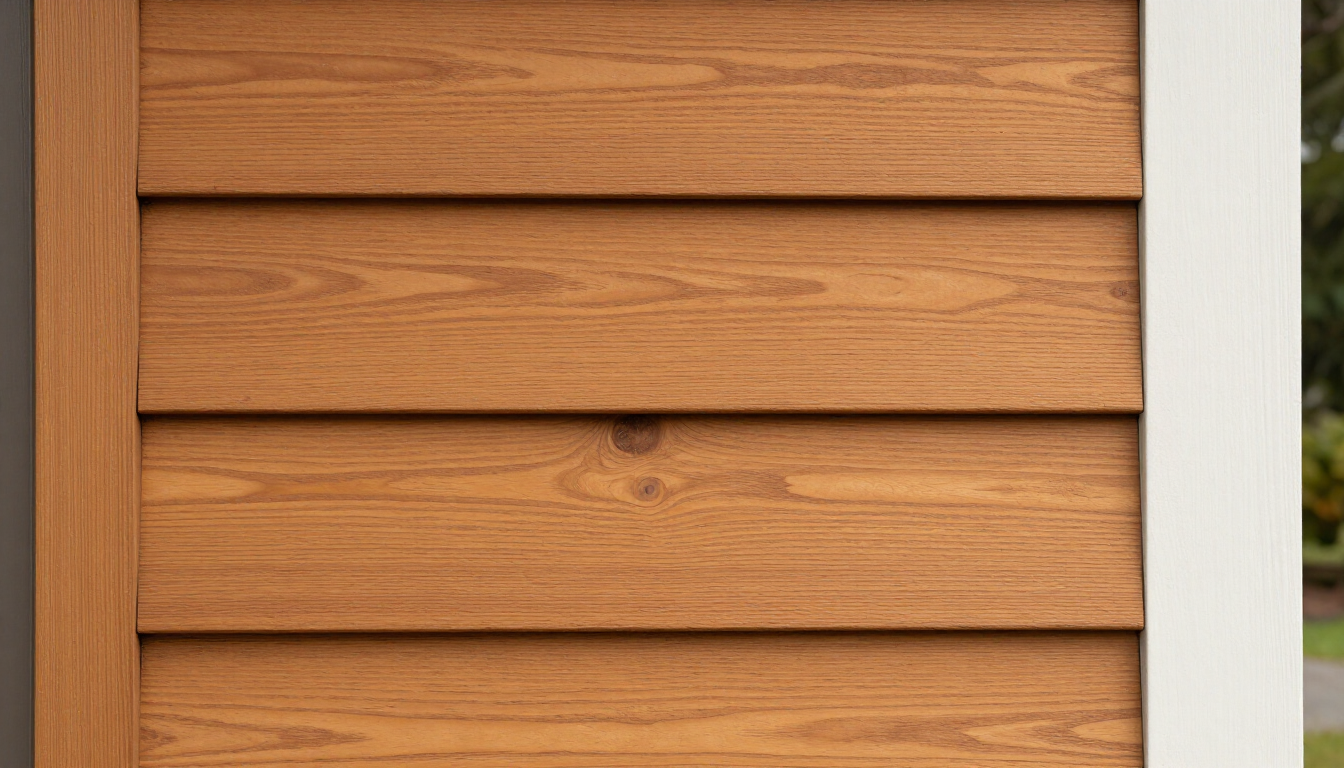
The Natural Appeal of Cedar and Wood Siding
Few exterior materials have the visual warmth of real wood. Cedar siding, in particular, has a grain, texture, and depth that catches light differently throughout the day something no photograph fully captures. For homeowners who want an exterior that feels genuinely rooted in its surroundings, wood siding offers a character that fiber cement and vinyl continue to try to replicate.
In the Pacific Northwest, cedar has always been a natural building material. The region's climate historically suited it, its appearance complements Northwest landscape and architecture, and it weathers beautifully when properly maintained. Neighborhoods across Bellingham include homes with cedar siding that has remained attractive for decades, evidence of what consistent upkeep can produce.
That same longevity depends on maintenance. Natural wood is not a set-it-and-forget-it exterior material. Homeowners who appreciate the appearance of wood siding and are willing to maintain it consistently tend to be very satisfied with it. Those looking for a lower-maintenance option may find fiber cement or vinyl a better fit for their situation.
Cedar and Wood Siding Styles
Wood siding is available in several profiles, each producing a distinct exterior appearance. The right style depends on your home's architecture, the visual effect you want, and the material grade you select.
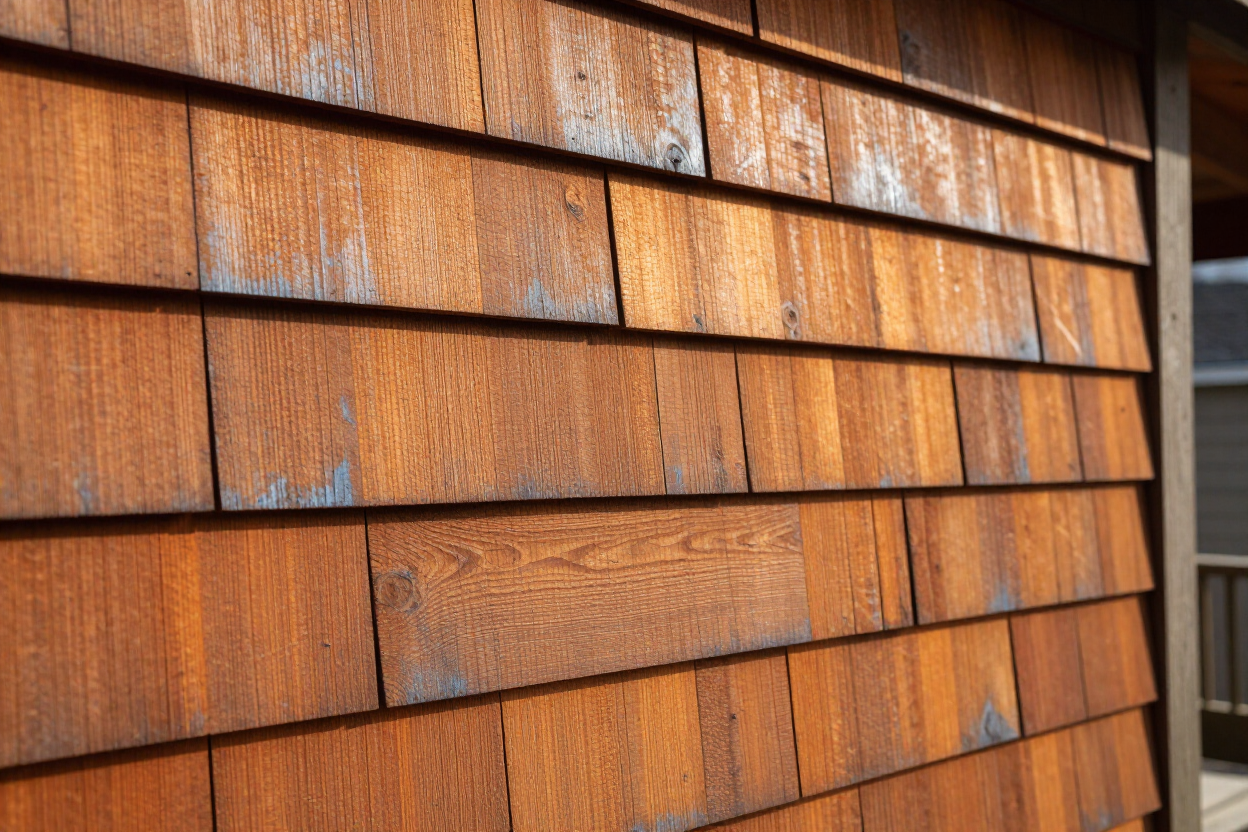
Most Common Style
Horizontal Lap Siding
Horizontal lap siding sometimes called clapboard is the most familiar wood siding profile. Boards overlap slightly as they run across the wall, creating a clean linear pattern with shadow lines that give the exterior depth. Available in varying widths, horizontal lap works well on a broad range of home styles and is one of the most common profiles found in Bellingham neighborhoods.
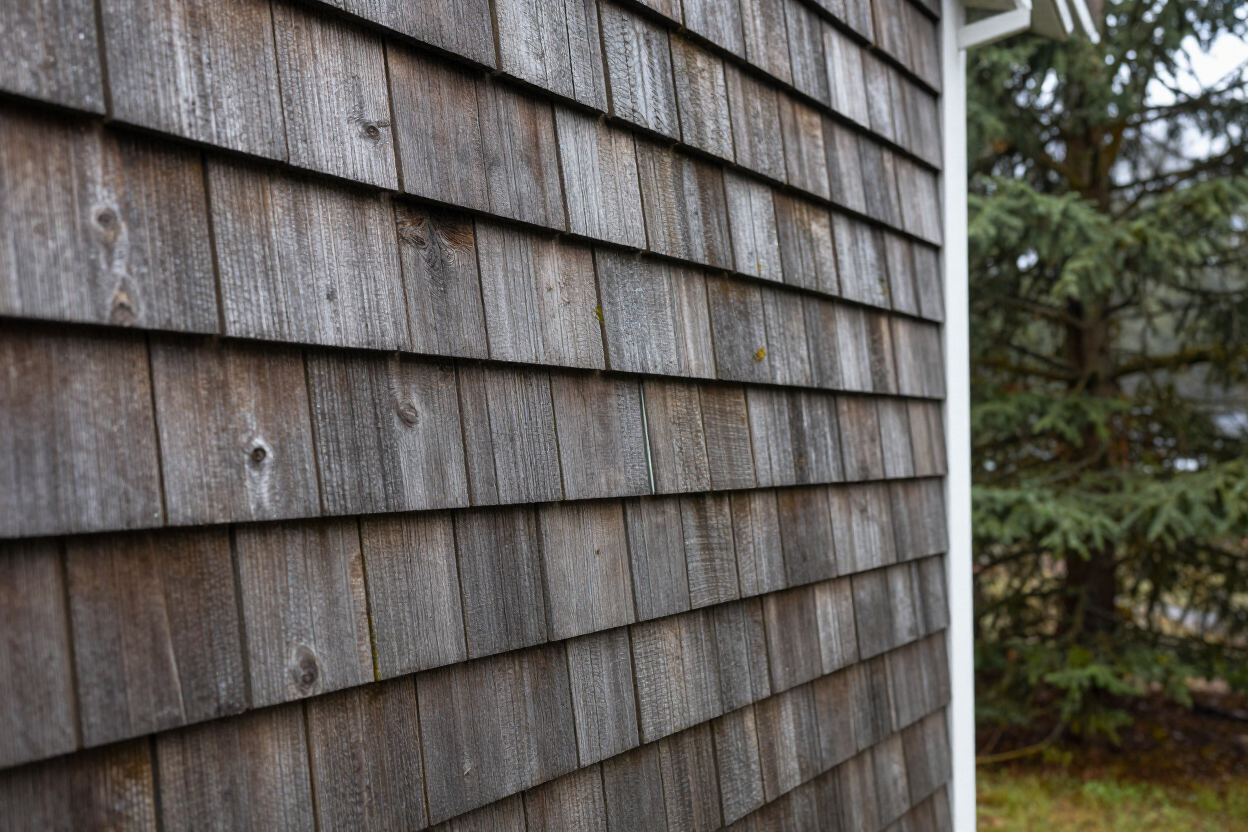
Natural Texture
Shingle and Shake Siding
Cedar shingles and shakes create a layered, textured appearance that suits craftsman, cottage, and coastal architectural styles. Shingles are smooth-cut and relatively uniform; shakes are split and have a rougher, more rustic surface. Both create strong visual character and are well suited to gable ends, dormers, and accent sections as well as full exterior applications.
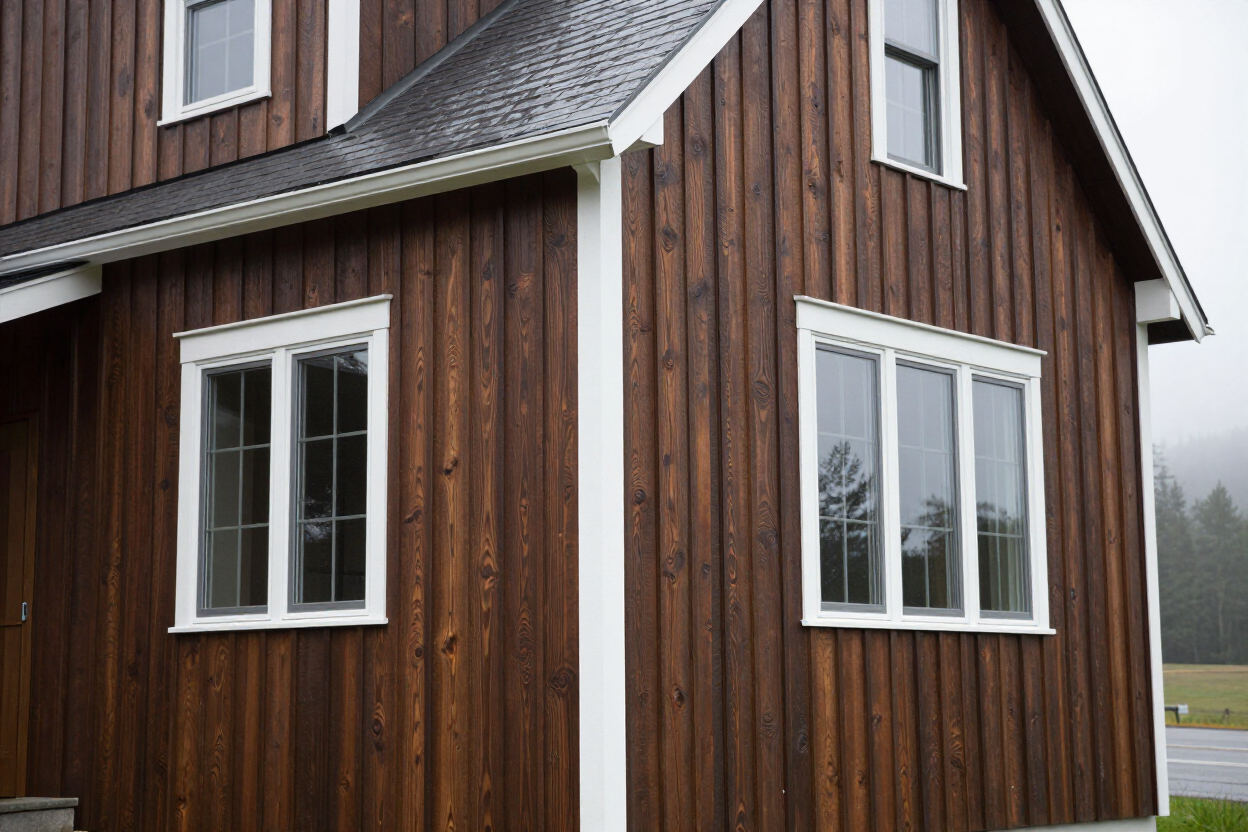
Vertical Profile
Board and Batten
Board-and-batten siding uses wide vertical boards with narrow strips battens covering the seams between them. The vertical orientation gives a home a taller, more modern appearance and works particularly well on farmhouse, contemporary, and mixed-material exteriors. It can be used across the full facade or as an accent treatment alongside horizontal siding.
Stain and Paint Finishes for Wood Siding
Finishing is one of the most important decisions in a wood siding project. The finish type you choose affects the appearance of your siding, how often it needs reapplication, and how well the wood holds up over time in Bellingham's wet climate.
Stains penetrate the wood fiber rather than sitting on top of it. A semi-transparent stain allows the natural grain and character of the cedar to show through while providing color and some weather protection. Solid stains cover more of the grain but still penetrate the surface, creating a look similar to paint with somewhat better adhesion in some conditions. Stains typically require reapplication every three to seven years depending on exposure, product quality, and surface preparation.
Paint sits on top of the wood surface and completely covers the grain. A well-prepared and properly painted cedar surface can look sharp and hold color well, but paint on wood siding requires careful surface preparation, quality primer, and attention to any areas where moisture might get behind the film. When paint begins to peel or fail, it typically requires scraping, sanding, and recoating more labor than restaining. Paint reapplication intervals vary widely based on the product, exposure, and how well the original application was done.
Neither finish is universally superior. Stain tends to be more forgiving on wood and easier to maintain on a siding surface that sees seasonal movement. Paint offers a wider range of color options and a more finished appearance. The right choice depends on your goals, your maintenance willingness, and the specific wood product and profile you select.
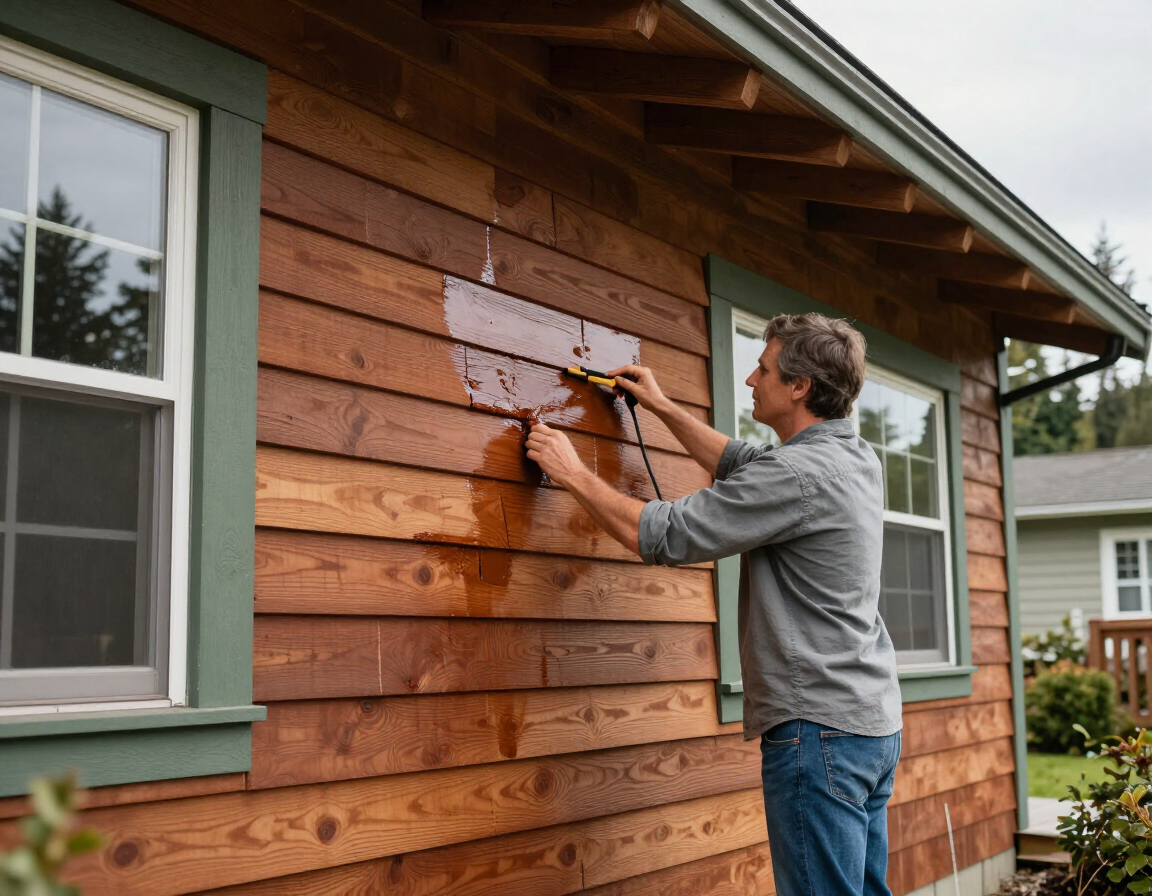
Moisture and Maintenance: What Wood Siding Requires in Bellingham's Climate
This section covers something worth saying directly: wood siding in a wet climate requires consistent maintenance. Bellingham averages over 35 inches of rain annually, with extended periods of overcast, damp conditions that keep exterior surfaces from drying quickly. Wood siding can perform very well in this environment but only when it is properly finished, regularly inspected, and refinished on schedule.
Cleaning is the starting point. Moss, algae, mildew, and dirt accumulate on wood siding in the Pacific Northwest and, if left in place, hold moisture against the surface and can degrade finishes prematurely. A gentle exterior wash using appropriate products and low pressure to avoid driving water behind the siding is recommended periodically and before refinishing.
Stain and paint do not last indefinitely. Inspecting the finish condition annually, particularly on south- and west-facing walls with more direct sun, allows you to catch areas where the finish is thinning, cracking, or peeling before moisture reaches the bare wood. Refinishing promptly when needed is significantly less disruptive and costly than addressing deteriorated wood after moisture has done damage.
Walk around your home once or twice a year and look closely at areas that hold moisture longer: the bottom courses of siding, sections around windows and doors, trim joints, and any areas where caulk may have failed or separated. Catching a small problem early a cracked board, a failed caulk joint, a small soft area is far more practical than discovering a larger moisture problem later.
Typical maintenance for wood siding in a wet climate includes: annual visual inspection, cleaning every one to two years, caulk inspection and touch-up as needed, and full stain or paint reapplication every three to seven years, depending on the product and exposure. These intervals are general guides your specific siding, finish, and exposure conditions determine the actual schedule.
Identifying Rot and Insect Damage in Wood Siding
Rot and insect damage are the two most serious concerns with wood siding in a wet climate. Both are preventable with proper maintenance, but both can develop gradually in ways that are not immediately obvious from the street.
Rot typically develops where moisture consistently collects or where the finish has failed, and bare wood is exposed to repeated wetting. The first sign is often a softening of the surface you may notice areas where the wood dents or compresses with light pressure, where paint is bubbling without an obvious impact source, or where the surface texture has changed. Dark staining in the wood, particularly at end grain or joints, can indicate moisture penetration. A small probe a screwdriver tip pressed gently into a suspicious area can help identify softness that is not visible.
Wood-boring insects, including carpenter ants and certain beetles, are attracted to wood that is already softened by moisture. Small round exit holes, sawdust-like frass along the wall, or hollow-sounding boards when tapped can indicate insect activity. Addressing the moisture source is a prerequisite to addressing an insect problem without it, any repair will remain at risk.
Individual boards or sections with localized rot or insect damage may be replaceable. A qualified professional can assess whether the damage is confined to the visible siding boards or whether it has extended into the sheathing, framing, or wall assembly behind them. When rot is limited to surface boards and the structural material behind them is sound, individual board replacement may be practical. When damage is more extensive, a broader scope of work may be required.
The most effective way to avoid rot and insect problems is maintaining the finish, keeping the bottom course of siding off the ground or standing water, ensuring that gutters direct water away from the walls, and not allowing debris to pile against the siding. Regular inspection is more valuable than reactive repairs.
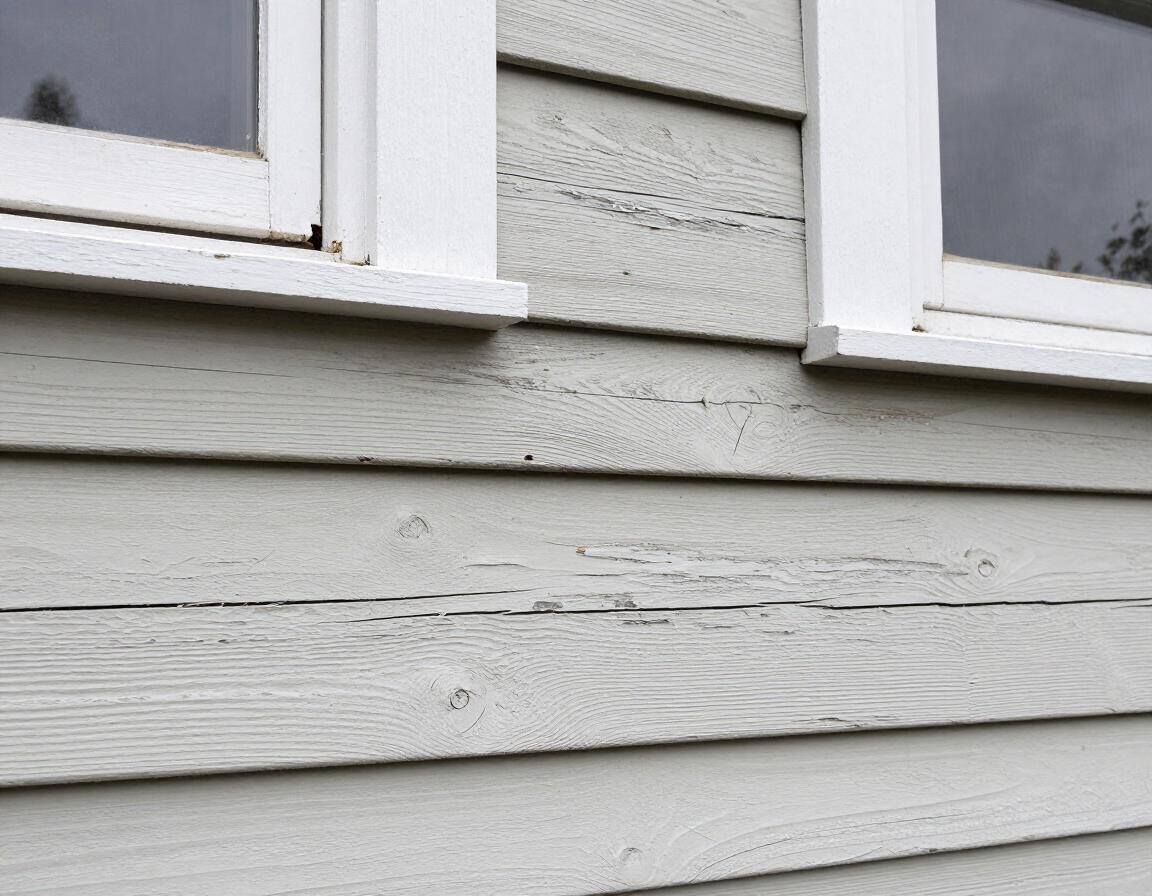
Ventilation and Drying Clearance Behind Wood Siding
No exterior siding system keeps all water out indefinitely. Even well-installed, properly finished wood siding allows some moisture to enter behind it during heavy or wind-driven rain. What matters as much as keeping moisture out is allowing any moisture that gets in to drain and dry before it accumulates against the sheathing or framing.
A rainscreen installation creates a small gap between the back of the siding and the weather-resistant barrier or sheathing beneath it. This gap allows water that gets behind the siding to drain out at the base of the wall, and allows air movement that helps the back of the siding dry between rain events. In a wet climate like Bellingham's, this drainage and drying capability can meaningfully extend the service life of wood siding and reduce the risk of moisture-related deterioration.
The base of the wall where the siding terminates above the foundation, a water table, or other transition needs to be detailed so water can exit without pooling. Bottom-course clearance from grade, deck surfaces, or other horizontal surfaces matters. Where the siding meets windows, doors, rooflines, and penetrations, flashing and sealant details are critical to keeping water from entering the wall cavity at those transitions.
These installation details are part of what separates a wood siding installation that lasts from one that develops moisture problems within a few years. When evaluating any siding project, it is reasonable to ask how the wall assembly is being handled, not just how the siding itself will look when installed.
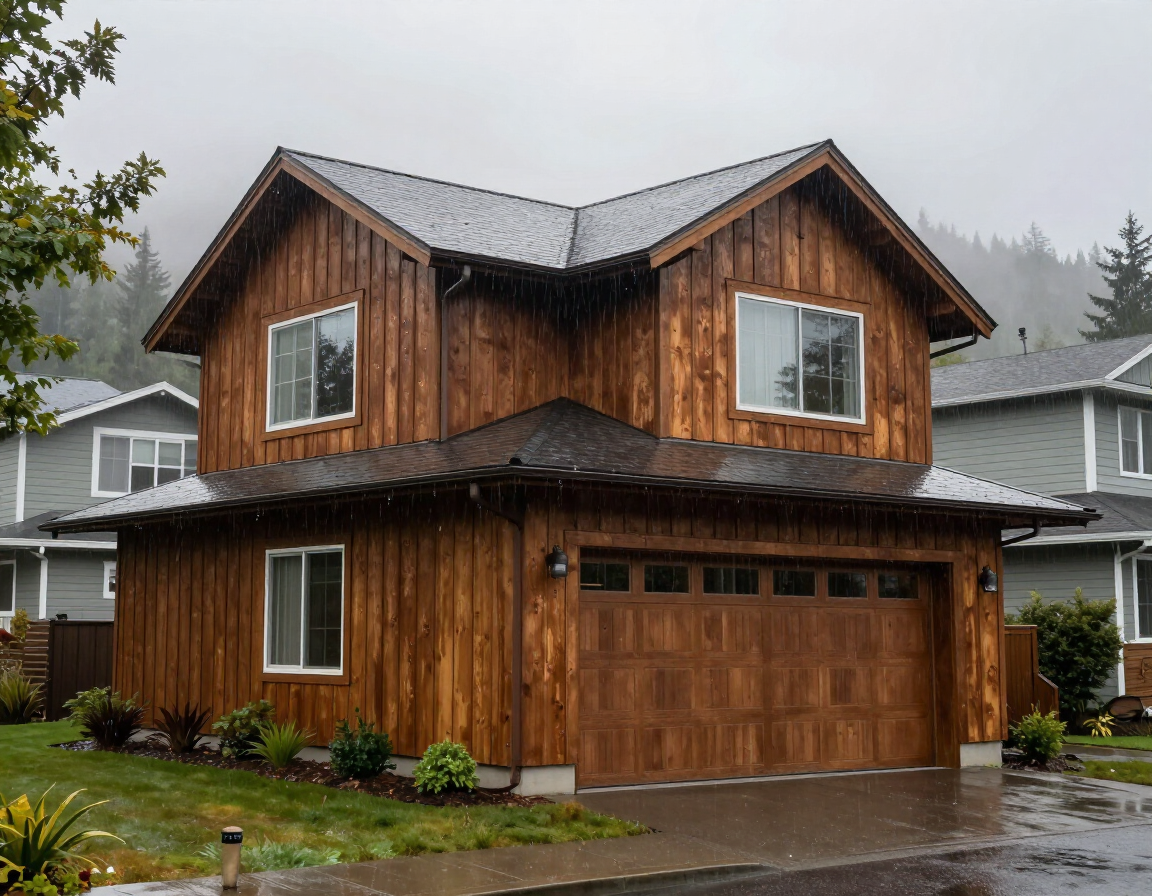
Northwest Weather and Wood Siding: What to Expect
Bellingham's climate is consistently damp. Rain falls across much of the year, temperatures stay relatively mild, and extended overcast periods keep exterior surfaces from drying as quickly as they would in a drier region. This environment is not hostile to wood siding; cedar, in particular, has natural properties that help it resist moisture and decay, but it is demanding, and the demands are predictable.
Moss and mildew growth is common on exterior surfaces throughout Western Washington. On wood siding, moss can hold moisture against the surface and accelerate finish degradation. Mildew can discolor the surface and begin to break down the finish film over time. Periodic cleaning and maintaining an intact finish are the primary defenses. Homes shaded by large trees or facing north may require more frequent attention.
Proper installation details, including weather-resistant barriers, correct flashing at windows, doors, and rooflines, and maintaining appropriate clearances at the base of the wall, are what allow a wood siding installation to hold up over the long term. The wood itself is only one part of the exterior wall system.
Homeowners who choose wood siding in Bellingham and maintain it consistently can have attractive, durable exteriors for many decades. The key is to start with realistic expectations: wood siding in this climate needs attention, and the time and periodic finishing costs are part of the total cost of ownership.
Cedar and Wood Siding Compared with Fiber Cement and Vinyl
Choosing a siding material involves trade-offs. No single option is right for every home, budget, or homeowner. The comparison below covers the most relevant differences across the three most common residential siding materials to help you evaluate which direction makes sense for your project.
Natural Material
Cedar and Wood Siding
Appearance: Natural grain, warm texture, and depth that manufactured materials replicate but don't fully match. Weathers attractively when maintained.
Maintenance: High. Requires regular cleaning, periodic staining or repainting, caulk inspection, and prompt attention to any finish failure or soft areas.
Longevity: Long if maintained consistently. Neglected, it deteriorates significantly faster than fiber cement or vinyl.
Cost: Material and installation costs vary by species, grade, and profile. Factor in ongoing finish maintenance when calculating total cost over time.
Best for: Homeowners who value natural appearance, are committed to maintenance, and want a material with deep architectural character.
Engineered Durability
Fiber Cement Siding
Appearance: Engineered to replicate wood grain, lap siding, shingles, and other profiles. Consistent surface; lacks the natural variation of real wood.
Maintenance: Lower than wood. Requires periodic repainting but does not rot, is not attractive to insects, and holds paint longer than raw wood.
Longevity: Generally strong durability in wet climates when properly installed and maintained.
Cost: Mid-to-higher range for materials. Installation requires more labor due to weight.
Best for: Homeowners who want a wood-like appearance with reduced maintenance and better rot resistance.
Lower Maintenance
Vinyl Siding
Appearance: Wide color and profile selection. Does not replicate real wood texture convincingly at close range but offers consistent color and finish.
Maintenance: Lower routine maintenance does not require painting. Periodic cleaning recommended.
Longevity: Good durability under typical conditions; susceptible to impact damage and color fading over time depending on product quality.
Cost: Generally lower material cost than wood or fiber cement.
Best for: Homeowners prioritizing lower maintenance and cost over natural appearance.
Factors That Affect Cedar and Wood Siding Project Costs
Cedar and wood siding project costs vary considerably depending on the scope and specifics of the project. The following factors affect what a project may cost; no price estimate should be taken seriously without a professional review of the home, materials, and conditions.
- Species and grade: Western red cedar is the most common choice in the Pacific Northwest but varies significantly in grade. Clear grades with fewer knots cost more than knotty or economy grades. Other species, including redwood and various engineered wood products, carry different price points.
- Profile and style: Horizontal lap, shingles, and board-and-batten differ in material quantity, installation complexity, and labor time. More complex profiles generally cost more to install.
- Home size and wall area: Total square footage of siding surface is the primary driver of material cost. More wall area means more material and more labor.
- Existing siding removal: If old siding must be removed before installation, that adds labor and disposal costs to the project.
- Wall condition and repairs: Damage to sheathing, framing, or flashing discovered after removal adds scope to any project. The extent of any underlying damage cannot be known without inspection.
- Finish type: Whether the siding is installed prefinished, factory-primed, or requires field finishing affects both material cost and labor.
- Window and door count: More openings mean more trim work, more flashing, and more detailed cutting and fitting — all of which affect labor.
- Access and site conditions: Multi-story homes, steep grades, or difficult site access may require additional equipment or labor.
- Geographic and market factors: Contractor availability, material supply, and local market conditions in Whatcom County affect pricing at any given time.
Submitting a detailed estimate request, including your home's approximate size, current siding condition, material preferences, and project timeline, helps any professional reviewing your request provide a more meaningful initial response.
How to Request a Cedar or Wood Siding Estimate
Requesting an estimate through North Sound Siding Co. is straightforward. Here is what the process looks like.
Step 1: Describe Your Project. Submit the estimate-request form with details about your home, current siding condition, the material you're interested in, your approximate timeline, and any photos that help illustrate the project.
Step 2: Project Review. The information you provide is reviewed for project type, location, scope, and material preference. This helps ensure that any referral is relevant to your specific situation.
Step 3: Connection With a Professional. If an independent siding professional serves your area and is available for your project type, your information may be shared with them so they can follow up about a potential estimate.
Step 4: Discuss Your Options. You can speak directly with the professional about scope, materials, scheduling, and pricing. Submitting a request does not guarantee provider availability, an estimate, or acceptance of the project.
Cedar and Wood Siding Estimate Requests in Whatcom County
Project requests for cedar and wood siding may be submitted from Bellingham, Ferndale, Lynden, Blaine, Birch Bay, Sudden Valley, Everson, and nearby communities throughout Whatcom County. Bellingham is the primary service focus, with coverage extending to surrounding areas.
Provider availability varies by project location, project type, and current scheduling. Submitting a request does not guarantee that a professional will be available for your project.
Cedar and Wood Siding Frequently Asked Questions
Common questions from homeowners considering cedar and wood siding for their Bellingham-area home.
How often does wood siding need to be stained or repainted in Bellingham?
There is no single answer — finish longevity depends on the product used, the quality of the application, the exposure of each wall, and how well moisture is managed behind the siding. A reasonable general range for stain reapplication is every three to seven years, and paint may last somewhat longer before requiring a full recoat. Walls facing south or west with more sun exposure and weather impact tend to need attention sooner. Annual inspection — looking for areas where the finish is thinning, cracking, or allowing moisture to reach bare wood — is the most reliable way to stay ahead of the schedule.How can I tell if my wood siding has rot?
The most reliable way to check is to probe suspicious areas gently with the tip of a screwdriver. Healthy wood is firm; rotted wood compresses or crumbles under light pressure. Areas to check closely include the bottom courses of siding, sections around windows and doors where water can collect, any area where the finish has visibly failed, and end grain at board terminations. Surface discoloration, paint that is bubbling without obvious impact cause, or a soft, spongy feel underfoot near a wall base can also indicate a moisture problem worth investigating further.Can I repair individual rotten boards rather than replacing all the siding?
In many cases, yes — if the damage is genuinely limited to a few boards and the sheathing and framing behind them are in good condition. A professional assessment is the only way to determine whether the rot is truly localized or whether it has extended behind the visible boards. When replacement boards can be matched reasonably well and the underlying wall assembly is sound, individual board replacement may be a practical and cost-effective option.Is cedar siding a good choice for Bellingham's wet climate?
Cedar has natural properties — including oils that resist moisture and decay — that make it better suited to wet conditions than many other wood species. Western red cedar, in particular, has a long history of use in Pacific Northwest construction. That said, cedar siding in Bellingham still requires regular maintenance. The climate is demanding enough that neglected wood siding of any species will deteriorate more quickly here than in a drier region. Cedar is a good choice for homeowners who value the natural appearance and are committed to maintaining it.What is the difference between a stain and paint finish on cedar siding?
Stain penetrates the wood fiber rather than coating the surface. A semi-transparent stain allows the natural grain to show through and provides color and weather protection; a solid stain covers more of the grain but still penetrates. Stain tends to fail more gradually — thinning rather than peeling — and is often easier to reapply. Paint sits on top of the wood, covers the grain completely, and offers a wider range of color options and a more finished look. When paint fails, it typically peels and requires more preparation before recoating. Neither finish is universally better — the right choice depends on the appearance you want and how you plan to maintain the siding.Does wood siding need a ventilated gap behind it?
A ventilated drainage gap — sometimes called a rainscreen gap — behind wood siding allows moisture that gets behind the boards to drain out at the base of the wall and allows the back of the siding to dry between rain events. In a consistently wet climate like Bellingham's, this detail can meaningfully extend the service life of wood siding and reduce the risk of moisture accumulation against the sheathing. Whether a specific installation requires or benefits from a rainscreen depends on the wall assembly, the material, and the exposure conditions.How does cedar siding compare with fiber cement in terms of maintenance?
Fiber cement requires less routine maintenance than cedar. It does not rot, is not attractive to wood-boring insects, and holds paint longer than bare wood. Cedar requires more frequent finishing attention and is more vulnerable to deterioration if maintenance is neglected. Cedar offers a natural appearance, grain texture, and character that fiber cement replicates but does not fully match. Homeowners who want the lowest possible ongoing maintenance often prefer fiber cement; those who value natural wood appearance and are willing to maintain it tend to prefer cedar. See the fiber cement page for more detail.What information should I include in my estimate request for wood siding?
The more detail you include, the more useful any professional response will be. Helpful information includes your property address, the approximate square footage of siding surface, your current siding material and its condition, the style and species you are considering, your approximate timeline, any known moisture or damage concerns, and photos of the current exterior if you have them. You can upload photos directly in the estimate request form.
Related Siding Services and Materials
Explore related services and siding material guides to help complete your research before submitting an estimate request.
Siding Replacement
Replacing aging, damaged, or deteriorating siding across the full exterior.
Thank you — your request has been received. We will review your project details and follow up if an independent siding professional is available for your area and project type.
Request a Cedar or Wood Siding Estimate
If you're considering cedar or wood siding for your Bellingham-area home, the first step is describing your project. Fill out the form below with as much detail as you have — including photos if available — and your information will be reviewed for a potential connection with an independent siding professional in your area.
Submitting a request does not guarantee provider availability, pricing, an estimate, or project acceptance.
By submitting this form, you agree that your information may be shared with an independent siding professional who can follow up about your project. Submitting a request does not guarantee provider availability, pricing, an estimate, or acceptance of the project.